
The Classroom Never Closes: Embracing the Journey of Lifelong Learning
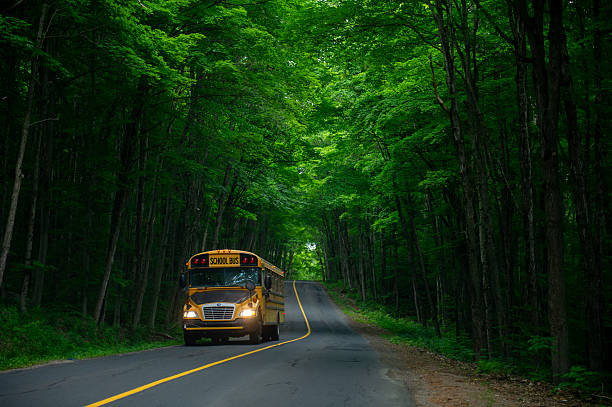
Across the globe, children are heading back to school. Summer vacations filled with family, friends, adventures, and a little freedom are coming to an end. Backpacks are being packed, school buses are rolling, classrooms are filling, and another year of learning begins. There is something beautiful about watching a child progress through the educational system. Each year brings new knowledge, new skills, new challenges, and new understanding. What once seemed impossible becomes familiar, while what was once confusing begins to make sense. Children learn not only facts and formulas, but also how to think, communicate, solve problems, interact with others, and navigate an ever-changing world.
But somewhere along the way, many adults begin to believe that learning has an expiration date. We graduate from high school, earn a degree, complete additional certifications or professional training, enter the workforce, establish our routines, and eventually settle into the belief that our formal education is behind us. But what if graduation isn’t the end of learning? What if it is simply the end of required learning? Learning is a lifelong endeavor, and when we embrace it, our lives have the opportunity to continue expanding long after we leave the classroom.

Learning Is About More Than Education
Education and learning aren’t necessarily the same thing. Education is often structured around a curriculum, teacher, assignments, tests, grades, and eventually a certificate or diploma. Learning is much bigger. It happens when you try something you’ve never done before, when you make a mistake and understand what went wrong, or when someone challenges a belief you’ve held for years. It happens when you listen to another person’s perspective and realize there is more than one way to see something.
Learning happens through experience. It happens through curiosity, conversation, observation, experimentation, failure, reflection, travel, relationships, books, nature, and simply paying attention to the world around you. Some of life’s most profound lessons never come with a diploma because they are acquired through actually living. The experiences we encounter throughout our lives can become an education of their own, provided we remain willing to learn from them.
Every Experience Can Become a Teacher
Think about how much you have learned simply by living. Perhaps a difficult relationship taught you how to communicate differently or becoming a parent taught you patience, flexibility, and a depth of love you couldn’t have understood beforehand. Maybe losing a job taught you something about resilience, starting a business taught you about risk, or moving somewhere new taught you how adaptable you really are. You may have learned something about patience while gardening, persistence while hiking, or creativity while cooking. Even our mistakes can become some of our greatest teachers when we are willing to examine them rather than simply move past them.
The experience itself isn’t necessarily the lesson. The lesson comes from what we take away from the experience. This is where lifelong learning becomes powerful. Instead of simply moving from one experience to the next, we can pause and ask ourselves what the experience can teach us. What did we learn about ourselves? What would we do differently next time? What do we understand now that we didn’t understand before? These questions transform ordinary experiences into opportunities for growth and allow us to continually add to our understanding of ourselves and the world around us.
You Don’t Have to Learn Something Huge Every Day
Lifelong learning doesn’t mean you need to enroll in another degree program, read an entire book every week, or master a new skill every month. It can be remarkably simple and can easily become part of your everyday life. You might learn a new word, look up something you’ve always wondered about, read a few pages of a book, or listen to a podcast that introduces you to a new perspective. You could ask someone about an area in which they have expertise, try a new recipe, learn how to grow something you’ve never planted before, or figure out how to use a technology or feature you’ve never explored.
Learning can also happen through ordinary experiences. Take a different route home and pay attention to what you encounter. Learn about another culture, try a new form of movement, watch someone demonstrate a skill you don’t have, or learn how to repair something instead of immediately replacing it. You might even spend time in nature simply observing what is happening around you. Sometimes learning doesn’t require doing anything new at all; it requires becoming more present with what you are already experiencing and noticing what it has to teach you. You don’t need a classroom to be a student. You only need curiosity.
Learn From Others
One of the greatest classrooms available to us is other people. Every person you encounter knows something you don’t. They have experiences you haven’t had and perspectives shaped by a completely different collection of circumstances, relationships, successes, failures, beliefs, and challenges. Instead of approaching every conversation from the perspective of what you can tell someone else, try occasionally approaching it with the question, What can I learn from this person?
Ask questions, listen, and remain curious. You might learn something about their profession, their culture, their experiences, their perspective, or even yourself. Sometimes the people who teach us the most aren’t the people who agree with us. Someone who sees the world differently can challenge us to examine our own assumptions and consider possibilities we may never have considered. That doesn’t mean we have to adopt another person’s perspective. It simply means we are willing to explore it. There is tremendous growth available when we can genuinely say, “I never thought about it that way before.”
Learn From Your Own Blueprint
Lifelong learning isn’t only about understanding the world around you. It is also about understanding yourself. Your blueprint is continually revealed through your experiences as you learn what energizes you and what drains you, discover your values, recognize your patterns, identify your natural gifts, and understand the experiences that shaped who you became. The more you learn about yourself, the more clearly you can begin to recognize the person beneath the roles, expectations, and identities you have accumulated throughout your life.
You might discover that something you once considered a weakness is actually a strength that has been operating without direction. You might recognize a recurring pattern in your relationships or realize that a goal you’ve been pursuing doesn’t actually align with what matters most to you. You might even discover that the person you’ve been trying to become isn’t actually who you were meant to be. These discoveries are learning, too, and perhaps they are some of the most important lessons we can learn because they allow us to continually refine our understanding of our own blueprint and make choices that are more aligned with who we truly are.
Stay Curious
One of the greatest threats to lifelong learning isn’t a lack of opportunity; it’s believing we already know enough. When we become convinced that we have all the answers, we stop asking questions, exploring possibilities, listening to others, and challenging our own assumptions. Curiosity keeps the door open and reminds us that there is always more to understand, even about subjects we already know well.
Instead of immediately thinking, I already know that, we can become curious about what else there is to understand. Instead of deciding, That’s just the way it is, we can ask why. Rather than avoiding something because we aren’t naturally good at it, we can approach it with the question, I wonder what would happen if I tried. This shift in mindset can change the trajectory of your life because it transforms learning from something you completed in school into something you actively pursue throughout your life.
Let Yourself Be a Beginner Again
There is something humbling about being a beginner. As adults, we often become accustomed to competence. We know how to do our jobs, manage our homes, navigate relationships, and handle many of life’s familiar situations. Then we try something new and suddenly find ourselves struggling with something that other people seem to do effortlessly. It can be tempting to interpret that struggle as evidence that we aren’t capable, but being inexperienced doesn’t mean being incapable. It simply means we are learning.
You don’t have to be good at something to begin learning it, and you don’t have to know what you’re doing before you start. You don’t even have to get it right the first time. You simply have to be willing to begin, remain open to feedback, and give yourself permission to improve through practice. Learning something new reminds us that being uncomfortable doesn’t necessarily mean we’re doing something wrong. Sometimes discomfort is simply the feeling of expanding beyond what we already know. Every time we allow ourselves to be a beginner, we strengthen our capacity to grow and remind ourselves that there is still so much we are capable of discovering.
A Life of Learning Is a Life of Expansion
Imagine looking back at your life and realizing that you never stopped discovering. You learned new skills, developed new interests, challenged old beliefs, and met people who changed your perspective. You traveled to places that expanded your understanding of the world, experienced failures that taught you resilience, and experienced successes that taught you what was possible. Along the way, you learned more about yourself and became wiser, not because you reached some final destination of knowledge, but because you remained willing to learn.
That is the beauty of lifelong learning. There is no final exam and no diploma that says you’ve figured everything out. There is simply another day, another experience, another conversation, another question, and another opportunity to grow. So as children around the world return to school with new backpacks and fresh notebooks, perhaps we can take a lesson from them. We don’t have to go back to school to become students again. We simply need to approach life with the same curiosity and openness to discovery.
Learn something new today. It could take five minutes, and it could come from a book, a person, a mistake, a conversation, nature, an experience, or your own reflection. Then tomorrow, learn something else. The classroom may change, the teacher may change, and the subject may change, but the opportunity to learn never ends. And neither does the opportunity to grow.
REFERENCES:
Åström, et al. The lifelong learner’s compass: Cultivating attitudes with self-reflection, openness, curiosity and motivation. Adult Education Quarterly, 2025.
Kolb, D. A. Experiential learning: Experience as the source of learning and development. Prentice-Hall, 1984.
Merriam, S. B., & Clark, M. C. Learning from life experience: What makes it significant? International Journal of Lifelong Education, 1993.
Rossing, B. E., & Long, H. B. Contributions of curiosity and relevance to adult learning motivation. Adult Education, 1981.
Qi, et al. Toward sustainable lifelong learning: Feedforward effects of challenge recollections on adult learning identity. Applied Cognitive Psychology, 2024.
IMAGE SOURCE: iStock Photo

Take Action And Transform Your Life With The Blueprint Method
Discover the power of The Blueprint Method and unlock your full potential today.
Invest In Yourself ~ You Deserve A Happy, Healthy Life

Get the latest stories, exclusive insights, and special offers delivered straight to your inbox.
Subscribe now to receive the newest articles and be the first to know about our exclusive offers and product updates.
By submitting your information, you`re giving us permission to email you. You may unsubscribe at any time.

Have questions or suggestions for a future topic?
Contact us and send us a message or leave a comment below.
Leave a Reply