
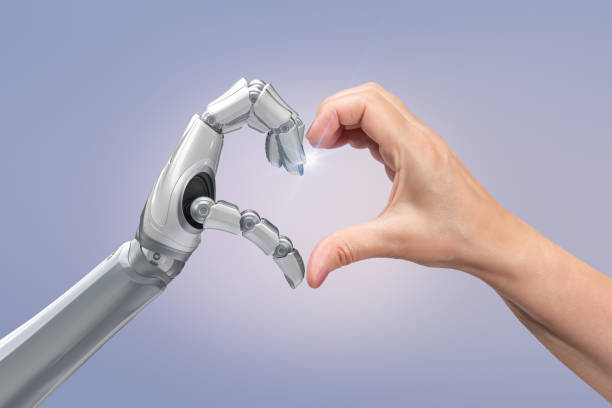
Enhancing Human Connection: How to Leverage AI in Your Relationships
In a world increasingly shaped by artificial intelligence, the question isn’t just what AI can do, but how it can deepen the most human part of our lives: relationships. While AI is often associated with automation and data analysis, it also holds powerful potential to enhance communication, empathy, and understanding across every type of relationship—from romantic partners to coworkers. The key lies not in replacing human connection, but in using technology to strengthen it.

1. Spouse/Partner: Enhancing Communication and Emotional Awareness
One of the leading causes of tension in intimate relationships is miscommunication. AI-powered tools like emotion tracking apps, journaling bots, and virtual relationship coaches can help couples understand their own emotional patterns and how they impact their partner.
Example: A couple uses an AI-enabled journaling app that provides insights into mood shifts over time. When disagreements arise, they can look at their emotional trends and see if stress from work or lack of sleep might be influencing their reactions. This data-driven reflection encourages compassion and reduces reactive behavior.
2. Parent/Child: Supporting Emotional Intelligence and Learning
AI can be a powerful ally for parents looking to support their child’s growth. Tools that offer customized educational support or track developmental milestones can help parents make more informed decisions. AI can also help children express themselves through child-friendly voice assistants that encourage curiosity and emotional dialogue.
Example: A parent uses an AI app that analyzes their child’s speech and helps track language development. It suggests playful activities that strengthen vocabulary, all while giving feedback on emotional tone—helping the parent support both learning and emotional expression.
3. Sibling: Deepening Bonds Through Shared Interests
AI can recommend shared activities or experiences based on mutual interests—turning routine interactions into meaningful moments.
Example: Two adult siblings living in different cities use an AI-based media app that curates movies, games, and conversation starters tailored to their personalities. Regular virtual movie nights become their tradition, with post-movie prompts sparking deeper conversations.
4. Friend: Navigating Life Transitions with Empathy
Friendships are often tested during transitions—new jobs, breakups, grief. AI-driven mental wellness apps can help individuals process emotions and share them more clearly with friends.
Example: A woman going through a divorce uses a chatbot to process her thoughts before reaching out to her closest friend. With the clarity gained, she communicates her needs with more self-awareness, and her friend responds with greater understanding. AI doesn’t replace the friend—it simply helps articulate the emotions behind the call.
5. Coworker: Improving Collaboration and Reducing Friction
In professional environments, AI tools can improve teamwork by identifying communication gaps, suggesting inclusive language, and reducing task-related stress through automation.
Example: A project management platform powered by AI analyzes team communication and alerts the manager when a particular team member is being consistently interrupted in meetings. The manager uses this insight to address group dynamics and make space for every voice—fostering psychological safety and trust.
Ethical Note: Use with Intention
AI is a mirror and a magnifier. It reflects our priorities and habits, and amplifies them. Leveraging it to improve relationships requires mindful engagement. Data privacy, emotional consent, and clear boundaries must guide every use.
Final Thoughts
The beauty of AI in relationships lies not in its intelligence—but in how it helps us become more intelligent in love, empathy, and connection. It’s not here to teach us how to love, but to give us the tools to love better.
When we use AI to listen more deeply, reflect more clearly, and communicate more openly, we’re not replacing the human blueprint—we’re honoring it.
REFERENCES:
Binns, R., Veale, M., Van Kleek, M., & Shadbolt, N. ‘It’s reducing a human being to a percentage’: Perceptions of justice in algorithmic decisions. Proceedings of the 2018 CHI Conference on Human Factors in Computing Systems, 2018.
Dignum, V. Responsible Artificial Intelligence: How to Develop and Use AI in a Responsible Way. Springer, 2019.
Rath, T. Life’s Great Question: Discover How You Contribute to the World. Gallup Press, 2020.
Shum, H.-Y., He, X., & Li, D. From Eliza to XiaoIce: Challenges and opportunities with social chatbots. Frontiers of Information Technology & Electronic Engineering, 2018.
Susskind, R., & Susskind, D. The Future of the Professions: How Technology Will Transform the Work of Human Experts. Oxford University Press, 2015.
IMAGE SOURCE: iStock Photo

Take Action And Transform Your Life With The Blueprint Method
Discover the power of The Blueprint Method and unlock your full potential today.
Invest In Yourself ~ You Deserve A Happy, Healthy Life

Get the latest stories, exclusive insights, and special offers delivered straight to your inbox.
Subscribe now to receive the newest articles and be the first to know about our exclusive offers and product updates.
By submitting your information, you`re giving us permission to email you. You may unsubscribe at any time.

Have questions or suggestions for a future topic?
Contact us and send us a message or leave a comment below.