
Step by Step: The Power of Walking Meditation for Mind-Body-Soul Alignment
In a world that often equates mindfulness with stillness, walking meditation offers a refreshing alternative. It invites you to engage your body in motion while cultivating a deep awareness of the present moment. Whether you’re wandering through a quiet meadow, a neighborhood sidewalk, or even your own hallway, walking meditation helps you align your breath, body, and energy with each conscious step.

What Is Walking Meditation?
Walking meditation is a form of active mindfulness. Instead of sitting in silence, this practice encourages gentle movement while maintaining focused attention on breath, bodily sensations, and the environment. Rooted in spiritual traditions like Buddhism—particularly in Zen and Theravāda schools—it has become a widely accessible form of mindfulness that anyone can incorporate into daily life.
Unlike walking for exercise or destination, walking meditation is about how you walk, not where you’re going. It is a practice in presence.
How to Practice Walking Meditation
You can begin walking meditation with nothing more than a few feet of space and a quiet intention.
Steps to Practice:
- Choose a location where you can walk undisturbed.
- Stand still for a moment and become aware of your breath and posture.
- Begin walking slowly and deliberately, focusing on each part of your step—heel, arch, toe.
- Synchronize your breathing with your steps if comfortable (such as inhaling for three steps, exhaling for three).
- Keep your hands relaxed at your sides or gently folded.
- When your attention wanders, gently return it to your body and breath.
You may also choose to silently repeat affirmations such as “I am present,” “I am grounded,” or “Each step is peace.”
Where Can You Practice Walking Meditation?
One of the most appealing aspects of walking meditation is its flexibility. You don’t need a retreat center or quiet forest to benefit from it—although those are wonderful options.
Outdoor Options:
- Nature trails or meadows
- Parks and botanical gardens
- Beaches or riverbanks
- Gardens, large yards, or farms
Urban and Indoor Options:
- Sidewalks and quiet neighborhood paths
- Courtyards or community green spaces
- Apartment hallways or building lobbies
- Living rooms, studios, or indoor open spaces
Walking meditation can even be practiced between tasks during your day, turning small transitions into intentional, mindful moments.
“Every path, every street in the world is your walking meditation path.”

Thich Nhat Hanh
/
Buddhist Monk, Author, Poet, Father of Mindfulness
Incorporating Grounding Through Barefoot Walking
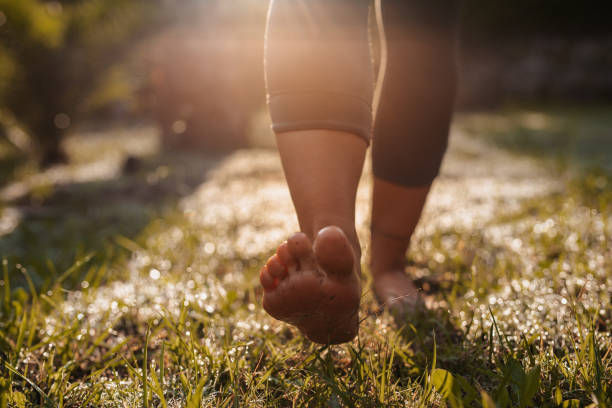
For added physical and energetic benefits, consider practicing your walking meditation barefoot on natural surfaces such as grass, soil, sand, or untreated stone. This is often referred to as grounding or earthing—a practice based on the idea that direct contact with the Earth’s surface helps regulate the body’s electrical and energetic systems.
Reported benefits of grounding include:
- Reduced inflammation and chronic pain
- Improved sleep and circadian rhythms
- Lower stress and cortisol levels
- Enhanced nervous system balance
- Improved immune and cardiovascular function
In urban areas, grounding can still be achieved. Look for:
- Bare patches of grass in city parks
- Unpainted concrete patios
- Rooftop gardens or community plots
- Even short moments standing barefoot in a natural spot
If barefoot walking isn’t possible, practicing with awareness and intention still allows you to receive many of the same meditative benefits.
Elements to Include in Your Walking Practice
Walking meditation is highly customizable. Some people choose to walk in silence, while others incorporate intentional cues to deepen the experience. Here are some elements to consider:
- Focused breathwork
- Repeating a mantra or affirmation
- Observing nature through the senses
- Gratitude reflections with each step
- Visualizing roots or light connecting you to the Earth
- Naming sensations, feelings, or thoughts without judgment
This can be a sacred space to connect with your inner guidance or release stored tension.
“Walk so that your footprints bear only the marks of peaceful joy and complete freedom. To do this you have to learn to let go. Let go of your sorrows, let go of your worries. That is the secret of walking meditation.

Thich Nhat Hanh
/
Buddhist Monk, Author, Poet, Father of Mindfulness
Benefits of Walking Meditation
The consistent practice of walking meditation offers wide-ranging support for mental, emotional, physical, and spiritual well-being.
Mental and Emotional Benefits:
- Reduces stress and anxiety
- Enhances mood and emotional balance
- Increases mental clarity and focus
- Supports mindfulness in everyday life
Physical Benefits:
- Improves posture, balance, and coordination
- Encourages circulation and lymphatic flow
- Supports healthy breathing patterns
- Offers gentle movement without strain
Spiritual and Energetic Benefits:
- Invites peace and presence into ordinary moments
- Deepens connection to nature and self
- Promotes a sense of calm and wholeness
- Helps align intention with action
Notable Figures Who Embrace Walking Meditation
Several well-known teachers and visionaries have spoken about the transformative power of walking meditation.
Thich Nhat Hanh, the Vietnamese Zen master, poet, and peace activist, made walking meditation a central part of his teachings. He wrote, “Walk as if you are kissing the Earth with your feet.”
Jon Kabat-Zinn, founder of the Mindfulness-Based Stress Reduction program, has included walking meditation in his curriculum as a core practice for integrating mindfulness into everyday life.
Even Steve Jobs, known for his visionary leadership at Apple, often held walking meetings, using movement as a way to stimulate clear thinking and meaningful conversation.
Final Reflection
Walking meditation is a powerful reminder that healing and presence are available to us at any moment. Each step can become an act of reconnection—not just with ourselves, but with the Earth, the breath, and the beauty of life moving around us.
Whether you are in a meadow, a park, or your own hallway, your next mindful step could be your most important one.
REFERENCES:
Chevalier, G., Sinatra, S. T., Oschman, J. L., Delany, R. M., & Subramanian, M. Earthing (grounding) the human body reduces blood viscosity—a major factor in cardiovascular disease. Journal of Alternative and Complementary Medicine, 2013.
Hanh, T. N. Peace is every step: The path of mindfulness in everyday life. New York, NY: Bantam Books, 1991.
Hanh, T. N. How to walk. Berkeley, CA: Parallax Press, 2015.
Kabat-Zinn, J. Wherever you go, there you are: Mindfulness meditation in everyday life. New York, NY: Hachette Books, 2005.
Menigoz, W., Latz, T. T., Ely, R. A., & Kamei, C. The effects of grounding (earthing) on inflammation, the immune response, wound healing, and prevention and treatment of chronic inflammatory and autoimmune diseases. Alternative Therapies in Health and Medicine, 2019.
Sadeghi, H., Allard, P., Prince, F., & Labelle, H. (2000). Symmetry and limb dominance in able-bodied gait: A review. Gait & Posture, 2000.
IMAGE SOURCE: iStock Photo

Take Action And Transform Your Life With The Blueprint Method
Discover the power of The Blueprint Method and unlock your full potential today.
Invest In Yourself ~ You Deserve A Happy, Healthy Life

Get the latest stories, exclusive insights, and special offers delivered straight to your inbox.
Subscribe now to receive the newest articles and be the first to know about our exclusive offers and product updates.
By submitting your information, you`re giving us permission to email you. You may unsubscribe at any time.

Have questions or suggestions for a future topic?
Contact us and send us a message or leave a comment below.